Holiday Patio Pavers: How to Keep Your Outdoor Living Space Pristine All Winter
Indigo Property Service • November 4, 2026
Upper Sackville homeowners often notice their backyard stones shifting and dipping as the ground freezes. Indigo Property Services frequently repairs outdoor living spaces ruined by poor initial construction methods. Understanding the mechanical failures beneath the surface helps you protect your hardscape investment from the harsh Nova Scotia elements.
Many people blame the pavers themselves when a patio becomes uneven. The actual problem always lies hidden in the dirt underneath the stones. A solid foundation dictates exactly how a surface reacts to freezing water and heavy snow loads. We are breaking down the structural reality of leveling out your backyard space.
A Look At Our Discussion Points
- The Frost Heave Cycle: How frozen water lifts heavy stones
- Sub-Base Failures: The real reason blocks settle unevenly
- Compaction Standards: Fixing the problem permanently
- Frequently Asked Questions
The Frost Heave Cycle
Homeowners often ask why are my patio pavers sinking and uneven after a heavy freeze. The answer comes down to trapped moisture. When water seeps into the soil beneath your patio it eventually freezes and expands. This expansion creates a powerful upward force known as a frost heave. The ice physically pushes the paving stones out of alignment.
When the weather warms up the ice melts and leaves empty voids in the dirt. The heavy stones then sink down into those voids. This constant up and down movement destroys the level surface of your yard. Proper patio paver installation prevents this by replacing water retaining soil with materials that drain efficiently.
Sub-Base Failures
Inexperienced builders often lay paving stones directly over topsoil or use improper sand bases. Topsoil acts like a sponge and holds massive amounts of water. As the winter rains hit Halifax that trapped water has nowhere to escape. It sits directly under the bricks and waits to freeze.
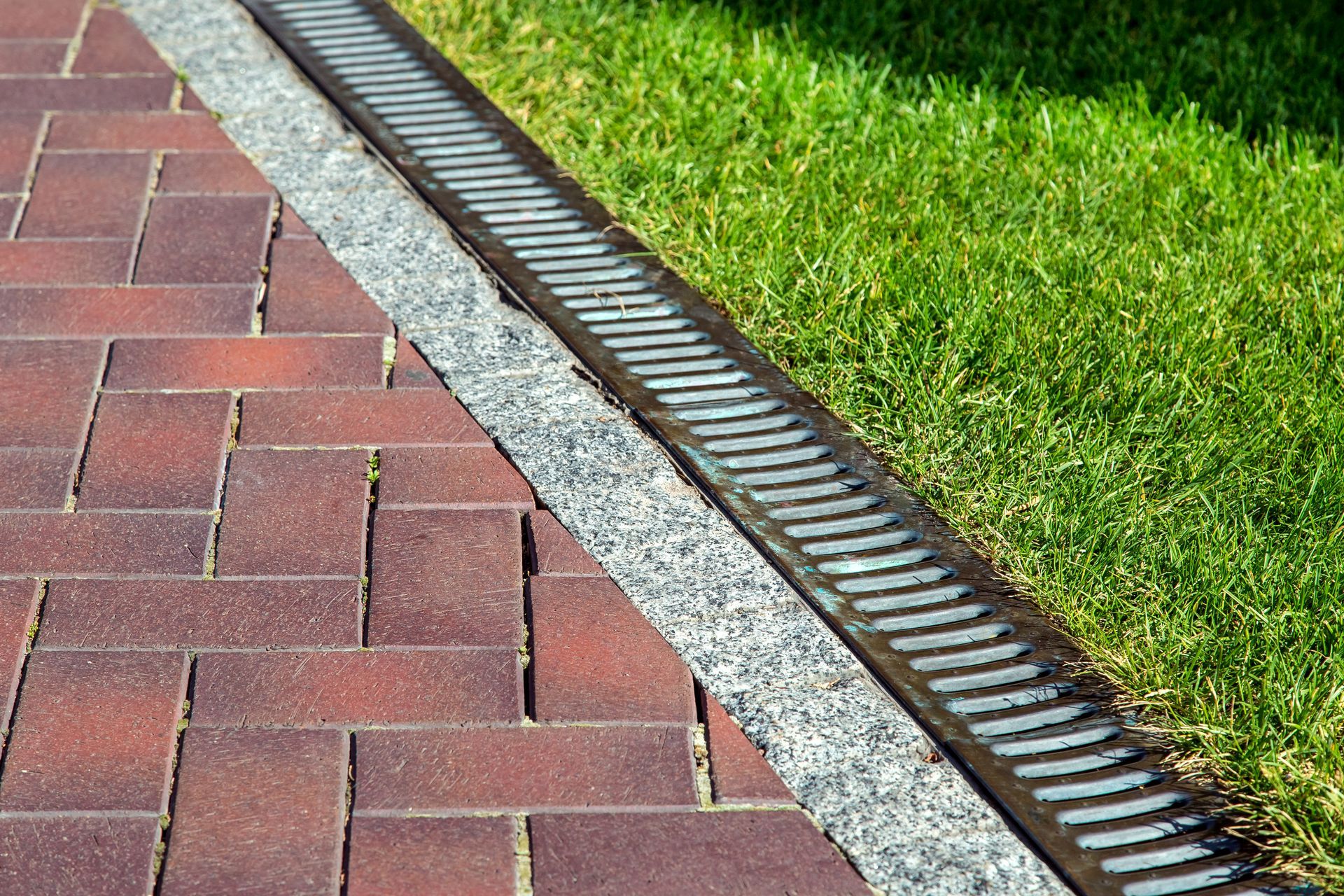
True hardscape stability requires removing organic topsoil completely. We dig down several inches and replace the dirt with crushed gravel. Crushed stone allows rainwater to filter down and away from the surface stones safely. If your yard suffers from severe pooling we often integrate dedicated drainage solutions to route the water far away from the new patio base.
► Client Experience: "Eric and his team built a retaining wall and patio for us. We were impressed with their consistent attention and responsiveness as questions came up and they delivered exactly what we asked for on time and on budget."
Kate C. highlights the reliability of a crew that takes the time to answer structural questions and builds exactly to the agreed specifications.
Compaction Standards
Simply pouring gravel into a hole is never enough. The material must be compacted into a rock solid base. We use heavy vibrating plate compactors to lock the crushed stone pieces together tightly. This process removes all the hidden air pockets that cause future settling.
Once the gravel base is perfectly flat we add a thin layer of bedding sand. The pavers are laid onto the sand and compacted again. Finally we sweep jointing sand into the gaps to lock the entire surface together. This rigorous method ensures the stones cannot sink or shift regardless of the winter weather.
Frequently Asked Questions
Can I use rock salt on my patio stones?
You must avoid using harsh rock salt on concrete or brick pavers. Traditional salt eats away at the surface of the stones and causes them to pit and crumble. You should use a calcium chloride ice melt instead which is much gentler on your hardscaping.
Should I shovel snow off my patio?
Keeping heavy snow off your patio stops excess water from soaking into the joints during a fast thaw. Use a plastic shovel rather than a metal one to avoid scratching the surface of the blocks.
Keeping Your Hardscape Level
A sinking patio creates serious tripping hazards and ruins the look of your backyard. Rebuilding the base with proper gravel and heavy compaction guarantees a flat surface for years to come. Call our team today to schedule an inspection of your settling stones.
Share This Blog